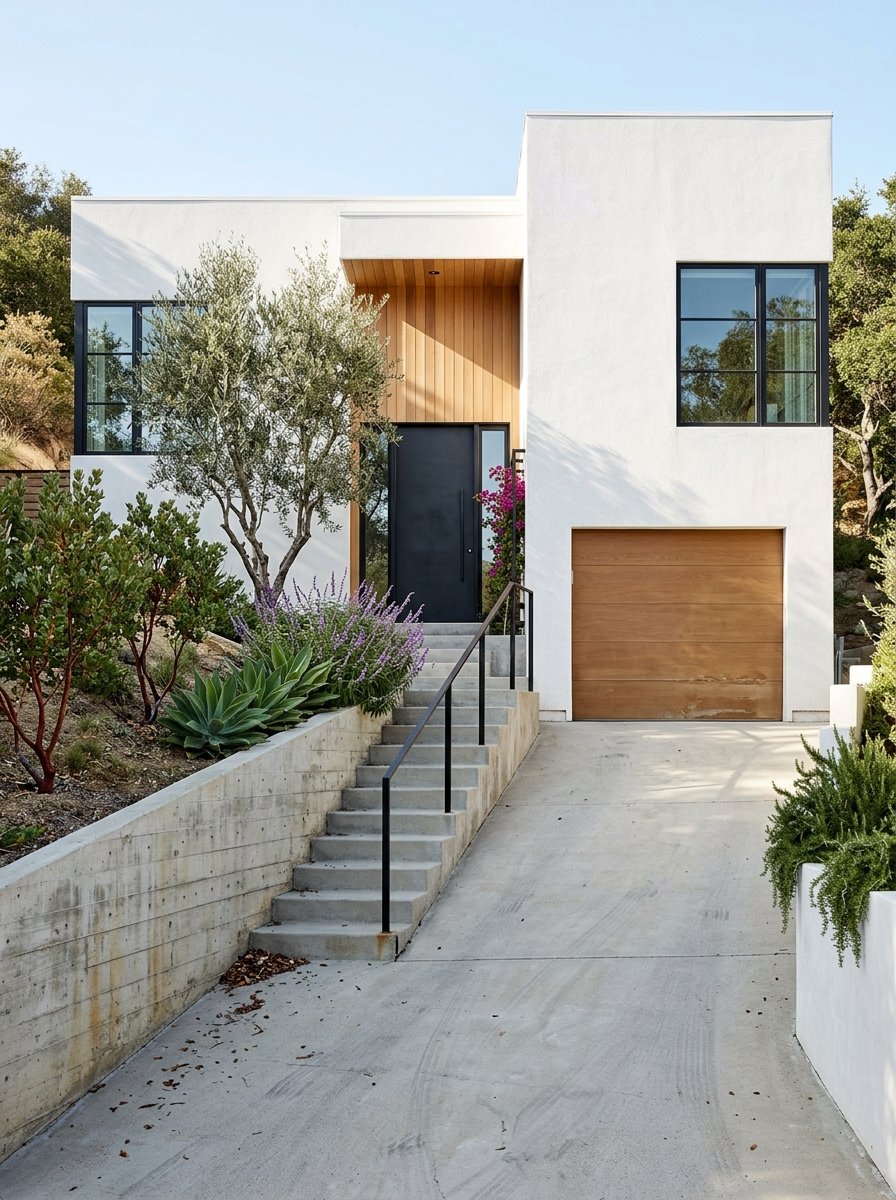
Riviera Santa Barbara Home Buying: Views and Tradeoffs
May 28, 2026
May 28, 2026
If you are drawn to the Santa Barbara Riviera, chances are the views got your attention first. From higher elevations above downtown, many homes capture sweeping outlooks over the city, ocean, and islands, and that appeal is real. But before you fall in love with a panorama alone, it helps to understand the day-to-day tradeoffs that come with hillside living. This guide walks you through what to weigh in the Riviera, from access and parking to renovation limits and wildfire due diligence. Let’s dive in.
The Riviera sits north of downtown Santa Barbara and above the downtown core, which is a big part of why it feels so special. The area developed in the early 20th century, and the neighborhood name itself was chosen to evoke a Mediterranean coastal image. That history still shapes the look and feel of the area today.
You can see the payoff of the hillside setting in places like Franceschi Park, where trails, free on-site parking, and panoramic city views give you a strong sense of what attracts buyers here. In practical terms, the Riviera offers a combination that is hard to replicate: elevated outlooks, close-in location, and established residential character.
In the lower-slope sections, the neighborhood also feels more layered and less uniform than a newer subdivision. Santa Barbara’s Lower Riviera design guidelines are intended to preserve an older residential area and its traditional streetscapes, which helps explain why many blocks feel established and distinct.
The Riviera’s beauty is tied directly to its topography, and that same topography affects how you move through the neighborhood. Santa Barbara’s pedestrian master plan identifies lack of sidewalks as the main issue in the Riviera, especially along Alameda Padre Serra. The city also notes that the paseo system helps circulation, but the hillside terrain and historic character make improvements difficult.
For you as a buyer, that means the experience of a home can change a lot from one block to the next. A property may offer a stunning outlook and still have a steeper walk, tighter street approach, or less comfortable pedestrian access than you expected. It is worth testing the route in person at different times of day.
Street width also matters here more than in flatter parts of town. The city’s Safety Element says many Riviera roads are old and narrower than the city’s minimum standard, which can make fire-apparatus access more difficult. That is not just a public safety issue. It can also affect how easy a home feels to reach, park at, and live in on a daily basis.
Parking can be one of the biggest practical differences between a home that feels effortless and one that feels frustrating. In the Riviera, you should not assume the neighborhood has a city permit system that will manage spillover parking for residents.
Santa Barbara’s residential permit parking program is resident-driven, and the current permit parking areas are West Beach, the Mesa, Las Positas/Modoc, and downtown, not the Riviera. So if parking is important to you, verify the exact block before you write an offer.
A smart showing strategy is to check more than the driveway itself. Look at guest parking, street width, turning room, garage usability, and whether parked cars make access tighter than it first appears. In hillside neighborhoods, these details often matter just as much as square footage.
Many Riviera properties come with charm, history, and architectural details that buyers love. They can also come with more rules if you plan to make changes later.
In Lower Riviera, all building-permit applications are subject to the district’s design review rules. Exterior alterations to single residential or one-story duplex structures are referred to the Architectural Board of Review, which can affect the timeline and scope of future projects.
That matters if you are thinking ahead to remodeling, expanding, or reworking outdoor areas. The district’s historic development pattern favors detached garages, minimally prominent parking structures, front porches, open yards, and wood-frame or wood-sided construction. The guidelines also discourage hard-surfacing visible yard areas, typically call for additions to remain subordinate and often toward the rear, and treat porches as important to livability while limiting large front wood decks.
In plain English, a great Riviera house is not always a blank canvas. If your plan depends on a major visible addition, a front-facing parking solution, or a dramatic hardscape overhaul, you should understand the review environment early.
On the Riviera, the lot can be just as important as the floor plan. Because of the hillside setting, buyers should pay close attention to drainage, slope movement, retaining walls, foundation condition, and driveway grade during inspections.
That practical focus lines up with the city’s slope-instability guidance, which highlights water, drainage, retaining walls, and vegetation as key controls. On a flatter lot, some issues may be more manageable. On a hillside lot, they can shape maintenance, comfort, and future project costs in a bigger way.
This is where construction literacy really helps. A beautiful view lot may still present friction if water does not move properly, access is awkward, or retaining improvements need attention. In the Riviera, the best long-term fit is often the home where the site works well, not just the one with the most dramatic outlook.
The Riviera is one of Santa Barbara’s higher fire-hazard neighborhoods. The city’s Safety Element identifies the Riviera among the High Fire Hazard Zones and says the Riviera, Cielito, Eucalyptus Hill, and Foothill have the greatest potential for a large, rapidly moving wildfire.
Santa Barbara’s wildland-fire information also states that any property in the city’s high fire hazard area is at risk from wildland fire. The city’s MAPS viewer allows you to search by address or APN to see whether a parcel is inside that layer, which makes this a practical step during due diligence.
You should also look closely at the outdoor space with maintenance in mind. CAL FIRE defines defensible space as the buffer between a structure and surrounding vegetation, with a 5-foot Zone 0 closest to the house, a 30-foot Zone 1, and a 100-foot Zone 2, though local agencies can be stricter. For a Riviera buyer, landscaping is not just about curb appeal. It is also about how realistically the property can be maintained in compliance with wildfire standards.
Emergency access is another fair question to ask when buying on a hillside. Santa Barbara’s current Safety Element update notes that state law now requires evacuation-route analysis, including capacity and viability, and identification of hazard-area residential developments with fewer than two emergency evacuation routes. If you are considering a specific property, this is part of smart, location-specific due diligence.
Hillside living often asks more of you after closing. Santa Barbara states that property owners are responsible for the sidewalk in front of their property and the adjacent parkway. In a neighborhood where slopes, older infrastructure, and limited sidewalks already affect daily use, basic exterior upkeep deserves more attention.
That does not mean the Riviera is not worth it. It means you should budget time and money for maintenance realistically. In this neighborhood, ease of ownership can vary quite a bit from one property to another.
Even with these tradeoffs, the broader Santa Barbara market remains strong. Redfin reported a Santa Barbara city median sale price of $2.0 million in March 2026, with homes averaging 43 days on market. Realtor.com reported Santa Barbara County as a seller’s market in March 2026, with homes selling at about 99% of list price and a median 42 days on market.
That backdrop helps explain why the Riviera continues to draw attention. Scarce views, historic character, and proximity to downtown are durable advantages. But in resale terms, the strongest premium is likely tied to homes that combine those lifestyle features with manageable access, usable outdoor space, and lower-friction maintenance.
If you are serious about buying on the Riviera, it helps to look at each property through two lenses at once. First, ask whether the home delivers the setting and character you want. Then ask whether the site works well enough to support everyday life.
A practical buyer checklist includes:
When you evaluate homes this way, the tradeoffs become much clearer. You are no longer just buying a view. You are choosing how you want to live with that view.
If you want help weighing Riviera properties beyond the listing photos, Caleb Overton brings local market knowledge, construction insight, and a practical eye for the details that can shape your ownership experience.
Stay up to date on the latest real estate trends.

Etiam non quam lacus suspendisse faucibus interdum. Orci ac auctor augue mauris augue neque. Bibendum at varius vel pharetra. Viverra orci sagittis eu volutpat.