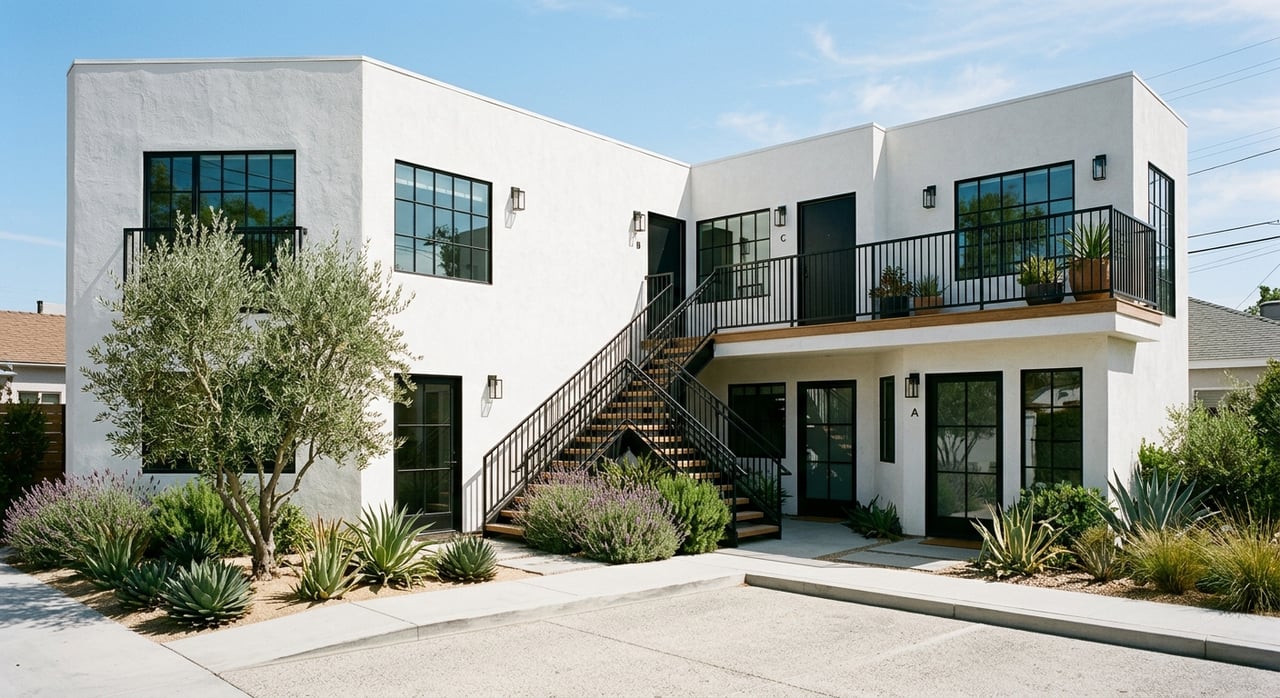
Santa Barbara Duplex and Triplex Investing Guide
June 25, 2026
June 25, 2026
Thinking about buying a duplex or triplex in Santa Barbara? It can be a smart way to live in one unit, create rental income, or add a small multi-unit property to your portfolio, but this market has a few local rules and realities you need to understand first. In Santa Barbara, location, parking, building age, tenant status, and redevelopment limits can all change the numbers fast. If you know what to look for early, you can avoid surprises and make a much more confident decision. Let’s dive in.
Duplexes and triplexes are not spread evenly across Santa Barbara. City planning documents describe the highest residential densities as being closer to commercial areas and transit, with neighborhoods like the Eastside and Westside including a mix of apartments, condominiums, duplexes, and single-unit homes.
Downtown and West Beach also tend to have denser multi-unit housing patterns. By contrast, areas like the Mesa, San Roque, Samarkand, and the Upper Eastside are described by the city as primarily single-unit neighborhoods, which makes small multi-unit opportunities less common there.
For you as a buyer, that matters because inventory is shaped by the city’s existing neighborhood pattern. If you are targeting a duplex or triplex, you will likely spend more time evaluating in-town locations and older residential blocks than primarily single-family areas.
Santa Barbara has a relatively low owner-occupied housing rate at 39.9 percent for 2020 through 2024, according to Census Bureau QuickFacts. That means rental housing plays a major role in the local market.
For a duplex or triplex buyer, that can create opportunity, especially if you want income from existing tenants or plan to occupy one unit and lease the others. It also means you should evaluate the property not just as a home, but as an income-producing asset shaped by local rental demand and local tenant rules.
A lot of Santa Barbara’s housing stock is older. The city’s housing element says 87 percent of local housing was built before 1990, so many duplexes and triplexes are older properties rather than recent construction.
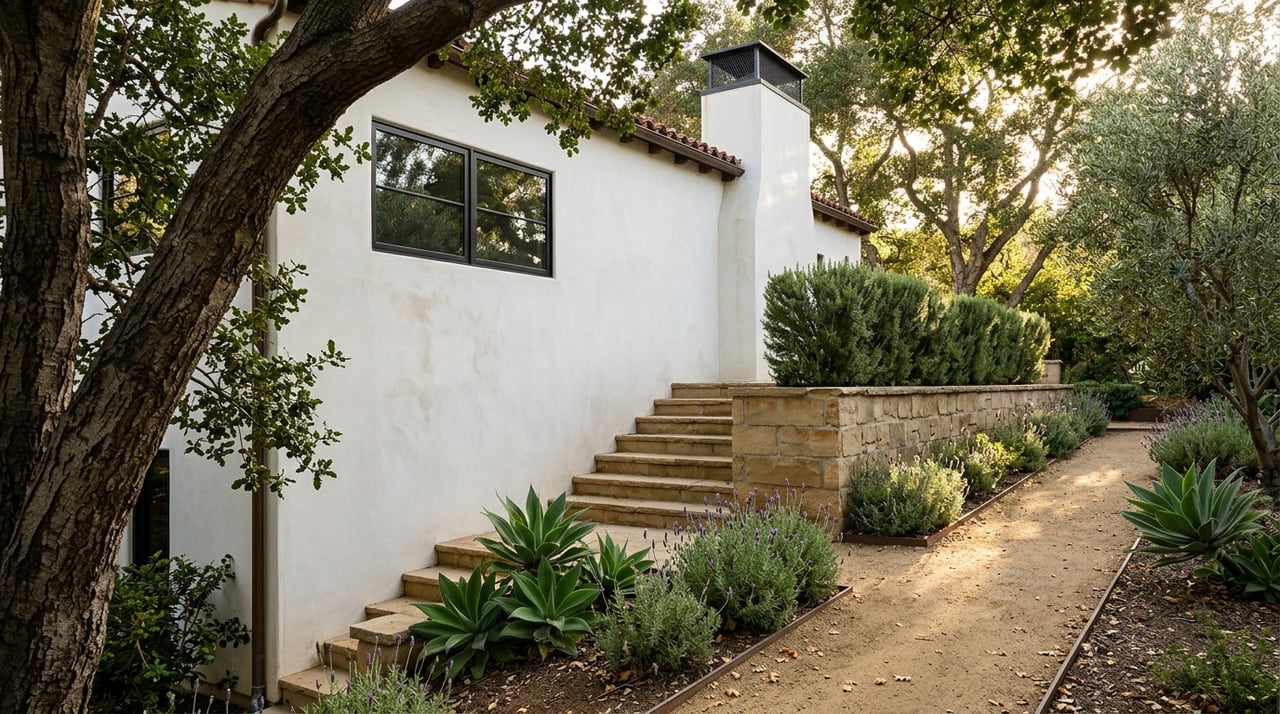
That older stock often comes with charm and variety. Historic surveys describe early local residential architecture as including Craftsman bungalows, small Spanish Colonial Revival homes, and National Folk-style residences, which helps explain why one duplex may feel very different from the next.
In Santa Barbara, a duplex or triplex may not look like a standard apartment building. You may see:
The city’s current design standards also use terms like Duplex Side-by-Side, Duplex Stacked, Duplex Court, Side Court, Cottage Court, and Medium Multiplex. Even if you are buying an older existing property, these labels can help you think more clearly about how the building fits on the lot and how the units function.
With older stock, condition matters a lot. Santa Barbara has a wide range of renovation levels, and a historical city survey of older Westside and Eastside neighborhoods found some units in moderate or substantial need of repair.
That does not mean every property has major issues. It does mean you should look carefully at roofs, foundations, drainage, windows, electrical systems, plumbing, and deferred maintenance, especially if the rents look attractive at first glance.
This is where local construction knowledge can really help. A duplex with cosmetic charm but aging systems may perform very differently from one that has already had major upgrades completed.
In Santa Barbara, parking is not a small detail. It can directly affect day-to-day livability, tenant appeal, and future resale.
The city’s residential zoning handout shows that parking requirements vary by project type. Two-unit housing calls for two spaces per unit, typically one covered and one uncovered, while multi-unit housing generally ranges from 1.25 spaces per studio to 2 spaces per unit for larger units, plus guest parking at one space per four units.
The city’s SB-9 handout also notes that two-unit projects may require one on-site parking space per unit unless a transit or car-share exception applies, and that properties in the coastal zone can face a two-spaces-per-unit requirement.
Parking pressure is a real issue in several parts of Santa Barbara. The city has designated permit parking areas in West Beach, the Mesa, Las Positas/Modoc, and six Downtown areas.
Eligible residents in a permit parking area can receive up to three annual residential permits plus one visitor permit per legal dwelling unit. Even so, off-street parking remains a major value point in denser neighborhoods where curb space is limited and managed.
If you are comparing two similar duplexes, the one with simpler, more functional parking may have better long-term economics. It can be easier to rent, easier to occupy, and easier to resell.
The city’s 2025 South Coast rent survey offers a useful snapshot of local private-market rents. For Santa Barbara duplexes and townhomes, the reported median rents were $2,825 for one-bedroom units, $3,950 for two-bedroom units, and $5,325 for three-bedroom units as of April 2025.
For context, the same survey reported apartment medians of $2,883, $3,836, and $4,925, while house medians were $2,998, $4,675, and $6,725 for one-, two-, and three-bedroom units. That gives you a helpful public benchmark when you are reviewing an occupied duplex or triplex.
There is one important caution. The duplex and townhome sample sizes were small, so these numbers are best used as a market snapshot, not as a precise comp set for a specific property.
If the property is tenant-occupied, you need to understand the local rules before you move forward. Santa Barbara says its temporary rent increase moratorium applies to certain multi-unit residential rental properties issued a certificate of occupancy on or before February 1, 1995 and not otherwise exempt under state law.
The city says this moratorium remains in effect through December 31, 2026 while a permanent rent stabilization ordinance is developed. The city also states that the ordinance does not change preexisting just-cause eviction requirements, and that new tenancies are not regulated on initial occupancy after the ordinance’s base date.
For you, this means an occupied duplex or triplex may come with operating constraints that affect future rent adjustments and your business plan. You should confirm unit occupancy, tenancy dates, and whether the property falls under the city’s temporary local rules before you rely on projected income growth.
Some buyers look at a duplex or triplex and immediately think about short-term rentals. In Santa Barbara, that can be a costly assumption.
The city’s current guidance says short-term rentals are regulated as hotels, allowed only in zones where hotels are allowed, and prohibited in single-unit and two-unit residential zones. If your investment plan depends on vacation-rental style income, you need to verify zoning and use rules early.
For most buyers considering a duplex or triplex, long-term residential use is the safer baseline assumption.
A small multi-unit property may look like a future value-add project, but redevelopment in Santa Barbara is not something to pencil casually. If you want to add units, rebuild, or substantially reposition a property, the rules can shift quickly.
Santa Barbara adopted Title 25 Objective Design and Development Standards for projects of two or more units, effective March 27, 2025. The city also notes that SB-9 duplexes and urban lot splits are processed ministerially only in qualifying single-family residential zones.
The city further requires inclusionary housing in multi-unit residential developments. It also has an Average Unit-Size Density program intended to support smaller residential units near transit and walkable commercial services.
In short, the redevelopment story may be promising, but it needs real upfront diligence. A property that looks simple on paper may have design, parking, zoning, or affordability requirements that change cost and timeline.
Before you move ahead on a Santa Barbara duplex or triplex, focus on a few core items first:
These steps can save you time and help you compare properties more accurately. In Santa Barbara, the details behind the listing often matter as much as the list price.
Buying a duplex or triplex in Santa Barbara can be a strong move if you go in with clear eyes. The best opportunities usually come from understanding where these properties are most common, how older buildings affect repairs and upgrades, and how local parking and tenant rules shape the bottom line.
If you are evaluating one now, it helps to have guidance from someone who understands both the neighborhood patterns and the physical realities of older housing stock. That kind of local and technical perspective can make the difference between a property that only looks good on paper and one that truly fits your goals.
If you want help sizing up a duplex or triplex in Santa Barbara, reach out to Caleb Overton for local insight, practical guidance, and a clear-eyed view of the opportunity.
Stay up to date on the latest real estate trends.

Etiam non quam lacus suspendisse faucibus interdum. Orci ac auctor augue mauris augue neque. Bibendum at varius vel pharetra. Viverra orci sagittis eu volutpat.