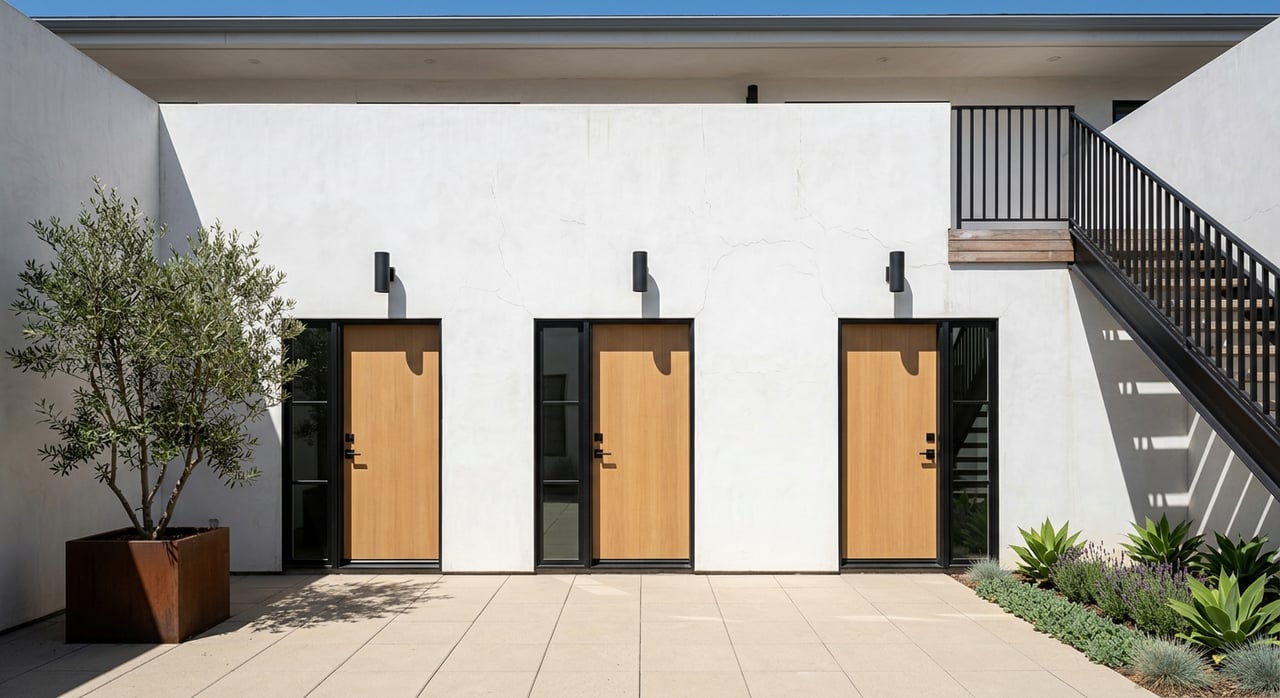
Goleta Small Multi Unit Investment Opportunities Guide
March 24, 2026
March 24, 2026
You don’t have to chase big apartment buildings to build steady rental income in Goleta. Small multi-unit properties like duplexes and triplexes can offer a balanced entry point, strong tenant demand, and clearer paths to value-add improvements. If you’re weighing your first purchase or your next one, you want facts on rents, returns, and what you can actually build under Goleta’s zoning. This guide gives you a practical, Goleta-specific playbook to evaluate opportunities with confidence. Let’s dive in.
Goleta’s rental demand is resilient. According to HUD’s analysis of the Santa Maria–Santa Barbara housing market, the area’s rental vacancy sat near 3.9% as of January 1, 2025, with forecast demand for several thousand additional rental units over the next three years. That tight baseline supports small multi-unit investments when you underwrite conservatively.
Local demand drivers are diverse. UCSB’s student population has hovered around 25–26k in recent years, which shapes leasing patterns in Isla Vista and nearby Goleta neighborhoods. See UCSB’s facts and figures for context. Beyond the university, the Hollister Avenue corridor and nearby employment centers contribute steady workforce demand for one- to two-bedroom units, supporting duplex and triplex fundamentals across multiple subareas.
Listing-based snapshots show a range for Goleta rents because they use different methods and samples. Recent medians and averages commonly fall between roughly 2,900 dollars and 3,700 dollars per month depending on whether the source reports a rolling median vs. listing averages and whether single-family homes are included. In student-adjacent pockets, per-bedroom and shared-occupancy leasing can push effective gross rent higher during peak academic terms.
Use a range instead of a single figure when you underwrite. Your most reliable inputs are actual in-place rents from the subject property and verified market comps for similar unit types in the same micro-location. If you plan to renovate, pair conservative marketized rents with realistic vacancy and turnover assumptions that reflect the target tenant profile.
Goleta’s Title 17 zoning code allows “Multiple-Unit Development” in the RM (Residential Medium Density) and RH (Residential High Density) districts. These districts set maximum densities, setbacks, open-space ratios, height, and parking standards that dictate whether a duplex, triplex, or small apartment is feasible by right or requires discretionary review. Review Goleta’s Title 17 zoning code and confirm the APN’s zone on the official map before you model unit counts.
Key steps to verify feasibility:
Goleta implements statewide ADU and urban lot split provisions within Title 17. ADUs and JADUs remain a common way to add a rent-producing unit to a single-family parcel, subject to objective standards and parking exceptions in the code. Urban lot split provisions and the related two-unit rules can allow up to two dwellings on eligible parcels under local criteria. Review the ADU sections and urban lot split language in Title 17 and confirm current standards with the City before you budget.
Some areas face restrictions or prohibitions on short-term rentals. Do not assume nightly or weekly rental income in your pro forma without confirming whether the lot and use are permitted. Reference the short-term rental language and any deed-restriction requirements in Title 17.
Small multis on the South Coast typically trade across a wide performance band. Recent local snapshots show GRMs often in the 10 to 15 range and cap rates that vary by location, tenant mix, and condition. Premium, well-located coastal or student-oriented assets can price at lower cap rates, while older or non-student properties may offer higher initial yield to reflect additional risk or renovation needs. For larger 5-plus unit assets, reports have frequently shown cap rates clustering in the mid-3% to mid-5% band in recent periods.
What this means for you:
Use two quick scenarios to size risk and upside:
If either scenario is highly sensitive to a single assumption, slow down and gather better evidence before you proceed.
Renovation inputs drive returns. As a starting point, Remodeling’s 2025 Cost vs Value report shows national job-cost benchmarks such as a minor midrange kitchen around 28,500 dollars and a midrange bathroom around 26,100 dollars. An accessory dwelling unit carries a much larger average job cost near 166,000 dollars in the report. California projects often price above national figures, and scope that touches structure, plumbing, or electrical can push costs higher.
Plan permitting and fees early. The City publishes a Development Impact Fee schedule and a Master Comprehensive Fee Schedule, and Title 17’s objective design standards influence timelines. Small by-right work in RM or RH may move faster than discretionary cases, but you should still plan for plan check and building permits. For projects requiring discretionary review, a review window of 8 to 16-plus weeks is a reasonable planning assumption. Use the City’s planning and permit guidance to budget time and fees before you close.
Practical tips:
Student demand drives strong gross rent potential in this area, with higher turnover and seasonality. Duplexes and triplexes here often price off strong per-bedroom income during academic terms. Underwrite with realistic turnover costs and summer vacancy planning.
Proximity to campus and retail supports a mix of tenant profiles and can suit owner-occupant investors who plan to live in one unit. Confirm parcel zoning and any overlays before assuming additional density. Use the City’s planning resources as a starting point.
Employment access supports steady workforce demand for smaller units. Watch the zoning map and upcoming proposals for medium-density opportunities that can fit duplex and triplex formats. Verify parking and transitional design standards near single-family areas before you design.
If you want a local, construction-literate perspective on a duplex or triplex in Goleta, reach out. With hands-on remodeling experience and deep knowledge of Santa Barbara micro-markets, Caleb Overton can help you confirm zoning, stress-test your pro forma, and sequence improvements so your investment performs.
Stay up to date on the latest real estate trends.

Etiam non quam lacus suspendisse faucibus interdum. Orci ac auctor augue mauris augue neque. Bibendum at varius vel pharetra. Viverra orci sagittis eu volutpat.